Monday, November 24, 2014

Attack of the Killer Tomatoes

Genetically Modified Organism

Today, those three words (or the three letters, G, M, and O) are enough to send the media and consumers into a frenzy.

In all seriousness, though. GMOs get a bad rep from large corporations, like Monsanto, who engage in rather ruthless business tactics and from the opposition who, more often than not, pick out key phrases and use them to play on the fears of the less scientifically literate.

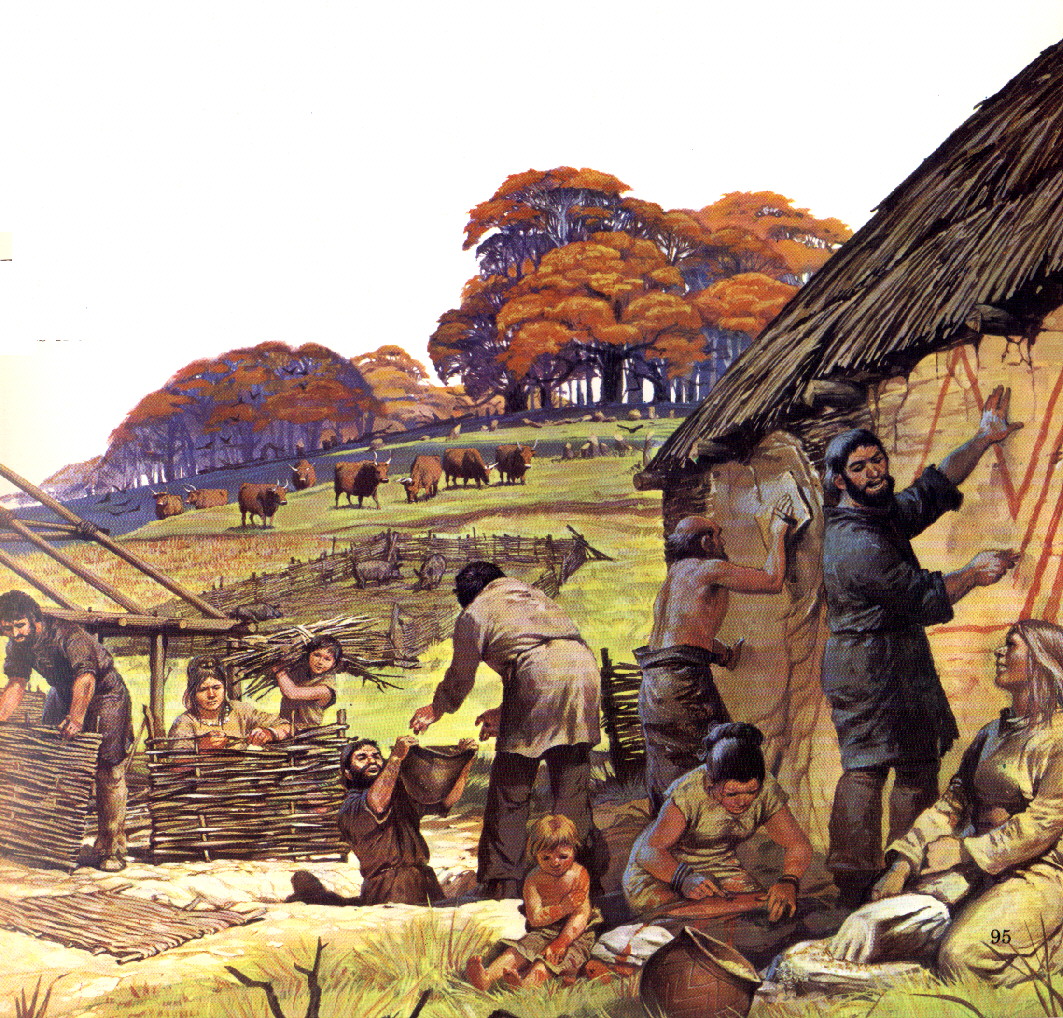
Let's face it, GMOs have been around for millennia. As long as agriculture has existed, genetic modification has been a part of its practice. Cross-pollination and hybridization are two terms long familiar to many farmers. By taking pollen from plants that exhibit desired traits and crossing them with other plants with different traits, we produce better crop yields, greater crop diversity, and better crop survival. This process dates to the neolithic age, for crying out loud!

Do you like citrus fruits? Guess what, with the exception of a small handful, all citrus available on the market is a hybrid of that small handful. Oranges, grapefruit, kumquat, lime, satsuma, etc. all are hybrids.

Do you like cereal or baked goods? Well, again, all modern strains of cereals are hybrids, cross-bred to produce fuller heads of larger seeds (and I'm not even starting on the "GMOs").

So, what's the big deal?

There seems to be a marked fear of science. Well, for certain sciences, that is. Nuclear science is feared, thanks to Chernobyl and Hiroshima, despite the fact that the latter is banned and the former is so much more unlikely, thanks to modern understanding and safeguard technology. Medicine used to be feared until necessity provided much-needed miracle cures and, now that many of these cures are less-needed, many of those fears are creeping back in (see the vaccine-autism plague). Similar things are happening in the realm of agricultural science.

I would argue much of the source of these fears lies in too much information paired with too little understanding.

  • We know that DNA contains the blueprint of the entire organism. Many don't understand the processes by which it is read, maintained, replicated, and passed on.
  • We know about the danger of infectious bodies, like bacteria and viruses. Many don't understand the uses these microscopic entities are put to. (Diabetics, you can thank bacteria and yeasts for your insulin shots).
  • We know the dangers of certain chemicals. We don't understand how they affect the body, whether they even affect humans, and what concentration is required to do so.

I could carry on; these are just three of the critical failings of modern scientific education and science journalism, which pertain to the GMO debate, but I think Alexander Pope did a fair enough job of that himself:
"A little learning is a dangerous thing
Drink deep, or taste not the Pierian spring
There shallow draughts intoxicate the brain,
And drinking largely sobers us again.
"
Now, yes, there are many sites and blogs declaring the benefits of GMO foods, trying to be heard over the clamour of their anti-GMO counterparts and they do an excellent job summarising and presenting the benefits thereof, but that is not my goal. After all, while my degree is in biology and I am science literate, I am not an active part of the agricultural science/biotech research circles. While I may read articles and journals, I am not involved in the testing. No, my purpose is one of my grander, overarching goals: to promote improved, free-thinking, critical learning, which, in turn, creates a wider scope of knowledge and greater depth of understanding, leading to a society of humble intelligence to replace that of proud ignorance.

Sunday, November 23, 2014

Suspension of Disbelief

Darwinism is flailing.

A cathedral of rhetoric, it has been build from the top down - an overarching theory supported by further theories reaching not into establishment, but into postulation. That is not to say aspects have not been proven true by any means.

Darwinism is a theory of the development of biodiversity driven from two central tenets:

  • Natural Selection
  • Common Descent
It presents that all life originated as a simple, aspecific life form (such as a simple bacterium) and that, through gradual accumulation of minute changes, current life forms changed and adapted to various environments and challenges, diversifying into new species. It says nothing about the origin of that first seminal life form, merely the progression therefrom.

The law of natural selection presents that:
  • Variation exists within a population
  • Individuals with variations more advantageous to the environment are more likely to survive and pass on their traits
  • Gradually, the population will shift to the more favourable form
The theory of common descent suggests that all life originated from a single organism.

Of the two, natural selection is well-documented and proven, being established into law.

Back to the original comment, however, Darwinism is in bad shape. The theory of diversification via accumulation is yet to solidify as anything more than theory.

Through the 19th century, much of the discussion pertained to the fossil record and its incompleteness. Many theories supporting Darwin's theories were suggested, each reliant upon further fossil discoveries. Then came the cambrian explosion. Massive numbers of fossils of great diversity were found in a stratum of rock ranging 55 million years, which is an extremely short time, evolutionarily speaking. This discovery rocked the palaeontological world with its great diversity and apparent lack of transitional or predating forms, leading many to further suspend the theory for yet undiscovered, earlier fossils.

Enter the ediacaran fossils.

These precambrian fossils presented a possible closure to evolutionary theory, but many palaeontologists expressed doubts that many, if any, of these fossils are actually precursors to those found in the cambrian strata.

Shelving the fossils, many turned to structural systems, suggesting that analogy indicated evolutionary similarity. From this set of theories, species with greater similarity branched later on the evolutionary tree than those with fewer similarities. As far as theories go, it was actually quite decent and, aside from the hitches throw in from convergent evolution (why would species diverge, then converge again in form?).

In the 20th century, studies on mutation presented a possible mechanism for variation to occur and, after the presentation of the structure and composition of DNA, it was generally accepted, then established, that the genome is what needs to be changed for variation to be produced. At this point, Neo-Darwinism came into play (Same as Darwinism, but stating that DNA is what varies, not mere "traits").

Unfortunately, as the science of microbiology progressed, the statistical impossibilities of mutation as a vector for gradual change and diversification began to present themselves.
  • DNA is a code - random mutations convert sense to missense, gradually degrading the code to non-function as more mutations occur in the same gene
  • The likelihood of randomly generating not just a random chain of A, C, T, and G, but one which successfully coded for a protein is astronomical 
  • Proteins exist in three tiers of structure (Amino acids, Aplha helices and Beta sheets, 3D structure and folding), each of which affects the subsequent tier 
  • Misfolded proteins (3rd tier) are hyper-specific, preventing much toleration for mutation
All of these discoveries create a larger, more impassable gulf for transitional evolution, as present proteins must descend into nonfunction before arriving at a new, functional form, making those intermediates unfavourable forms and unlikely to be selected. After all, we must remember that natural selection selects for the present. It is not some intelligent force that is able to select for future forms. Dr. Michael Behe likened Darwinian evolution to a series of multi-doored rooms in which one cannot backtrack - an individual does not know where each series of choices eventually leads, but, upon reaching a dead end, there is nowhere further to go.

So, I say Darwinism and, by extension, Neo-Darwinism is flailing. Having little solid foundation which is not rendered null by improbability, conflicting theories, or missing evidence, it is built largely upon conviction, a conviction which has defied logical opposition and rational thinking out of a willful desire for its veracity. 

It is, in the truest sense of Coleridge's genius, a suspension of disbelief.

Credit must be given to Drs Steven Meyer and Michael Behe as much of what is presented was drawn from a collection of my overall undergraduate education and their books Darwin's Doubt (Meyer), Darwin's Black Box, and The Edge of Evolution (both Behe).

Friday, November 14, 2014

Welcome Back - Now that You're Here

This is part 2 of my series welcoming TCKs back into the country (see part 1). Again, any TCKs having experienced reintegration, feel free to chip in.

So, a couple days ago, I wrote about what to expect when you, as a TCK, are returning to the USA. Today, I want to finish this series off with some things to do that will help smooth the reintegration process.

Now that You're Here:

Do: Find other TCKs in your area. (My university had a connect group for MKs, which was awesome). Yes, many Americans will not understand you completely, but many TCKs will.

Do: Make American friends.

Don't: Avoid all Americans because of some first appearance, accidental slight, or preconceived notion.

Do: Find local internationals. My freshman year, I would hang out at the indoor soccer fields just to hang out with other Africans and to hear African accents.

Do: Introduce your new American friends to the food and culture of your home/s

Don't: Look down on American culture (or the "lack thereof"). Instead, take time to discover things about your new home that you can celebrate and engage with.

Don't: Force the entire city to listen to music from home. While you might love it, others might not.

Do: Make mistakes (and learn from them). For example, one tailgate, a bunch of the guys from my hall were laughing at another for something he had done, so I chipped in and called him a "vark" (pig, in Afrikaans), but, not understanding me, the guys thought I said "f***" and almost flipped out.

Do: Take time to keep in touch with friends back home. This, I didn't do and I wish I had done more of.

Do: Set aside time to Skype home. You may not think you'll need it, but I can guarantee your parents will.

Don't: Play the foreigner card. It's cute and fun for the first couple weeks, but continually shoving it in people's faces will just turn them [potential friends] away.

Do: Find ways to practice any languages you learned while overseas

Do: Find ways to remember home. (For me, I keep plenty of rooibos tea on hand and I listen to township jazz or afrikaanse treffers when I miss home)

Do: Take time to freak out when you see something from home in a store. (I've done it. No shame)

Do: Find a local church

Do: Find a nice lady/gentleman and fall in love (American or international - it doesn't matter)

Do: Learn American timeliness

Do: Forget about American timeliness (It's soul-sucking, so I don't mind slipping on occasion)

Don't: Be chronically late

Don't: Claim permanent jet lag

Do: Settle down (It doesn't matter where, but take time to make a Home. It's important and, for possibly the first time in your life you'll feel like you're finally at home, which is an amazing, yet foreign concept*)

Lastly,

Do: Have fun. This is a big time in your life in which you can totally be yourself and find yourself.

*I remember when I told my now fiancee that, with her, I felt at home. It was one of the truest expressions of love I have ever experienced or uttered.

Wednesday, November 12, 2014

Welcome Back - What to Expect

(This is the first in a 2-part series for TCKs returning to the USA. Some of this is gleaned from first-hand experience. Other adult TCKs who have reintegrated, feel free to add in the comments section. I will incorporate it into the post with credit given.)

So, you're returning to the grand old US of A? I feel you. I was there four years ago. Heck, I'm still there, but I can promise that it gets easier and I want to give you some of my experiences to help prepare you a little bit.

Things to Expect:

Positive military presence (I know this may sound strange to TCKs from Central Africa, South America, or Southeast Asia, but it's true. America's military is mostly celebrated and thanked. It's amazing)

The Stars and Bars. If you're anywhere in the South, you'll see this baby flying proudly on belt buckles, tattoos, decals, houses, and even off the backs of trucks. Seriously. I used to be offended and think it mighty strange that people were even permitted to fly the flag of a failed rebellion, but it's allowed and, in many places, celebrated. (Complete with calls of "The South will rise again!")

Rules are different. Things you may be used to doing can and will get you into trouble:

  • No jaywalking (To the rest of the world, zebra crossings are merely suggestions, but to the USA, crossing wherever you please will get you in trouble)
  • No piling a car past max capacity
  • No passengers on the back of a truck (or in the trunk of a car, for that matter)
  • No bribing the police officers. Seriously, don't.
  • Motorcyclists, don't weave in and out of traffic. Motorists, don't make a new lane.
  • No bare feet in public buildings. (Between you and me, I still don't get this. I mean, the only person you're putting at risk is yourself. Also, Americans seem to have this thing about feet.)
  • Drinking age is 21, not 18. (Not that I advocate drinking, just warning you ahead of time)
  • Speed limits are enforced, not suggestions.
  • Right turn on red (a heavenly blessing that exists solely because other drivers actually follow the rules)
America is also fairly germophobic. I work as a waiter, so I know the health codes; some of them are ridiculous. As a biology graduate, I know some of them are redundant, pointless, or even ineffective. I also happen to know what can actually kill you (and as an African, I've probably been exposed to them anyways). Not to mention the majority of the public is woefully un-/misinformed when it comes to various diseases and their transmission/prevention (I've seen people wearing masks to avoid ebola). That being said, don't go out of your way to bolster their immune systems. It's just not cool.

America. Is. On. Time.
Seriously. Almost soul-suckingly so.
So, for all of you who, like me, come from time-liberal societies, I recommend setting your clocks 5-10 minutes ahead. I'm almost always 5 minutes late: either I've underestimated the traveling time or I've underestimated how long it will take to finish what I'm working on/the conversation I'm having.
(And yes, being late because you were having a good conversation with a new/old/long-lost friend is not a valid excuse for your lack of timeliness).

Wal-Mart
Yes, it's big. No, it's not that big. It's bigger.
Seriously, though. Almost every TCK has what I call the "Cereal Aisle Moment" when they just stop and gawk as the gross extravagance, amount, and variety of food on the shelves. (and yes, it's almost always the cereal aisle that does it. So many types of cereal...)

Many Americans are wasteful. I still remember the first time I saw someone simply throwing leftovers away. I was visiting someone's house for dinner and they were clearing the table. I just stood there, flabbergasted that people would just waste what could be another day's meal. As a waiter, I've become slightly desensitised, but it still catches me off guard.

It's often more than just a few crumbs, too
Americans can't spell. Seriously, how hard is it to spell colour, flavour, theatre, centre, or favourite?

People are different. I mean, it goes without saying, but it's true. whether they're white, Asian, Black, Indian, etc., they're different. If you're used to Danes, be prepared to be surprised by white Americans, especially if they have Danish last names - they're not Danish; they're American. 

Following that, cultures are different. 

Food is different. While the gastronomic preference of America is indeed shifting, it is nothing like that of West Africa, Central America, South Asia, etc. If you want authentic food, move to a big city and look for pockets of immigrants - they'll tell you where to go.

Americans don't all sound like Larry the Cable Guy.

Lastly (for now), guns. Many Americans own guns and will vehemently fight for their right to do so. Stand your ground laws still exist as do castle doctrine laws. So, if you're from militantly unpeaceful areas of the world or are from areas which frown on gun ownership, don't be afraid or alarmed. Actually, you can rest slightly easier as, depending on who you ask, stand your ground laws contribute to a lower incidence of murder and armed assault.

So, yes, Americaland is a strange place, but it can also be very fun and exciting. It just takes some preparation and a bit of good humour.

For suggestions and tips on navigating your reintegration, read part 2

Monday, November 10, 2014

The One about Respect - Redux

It grieves me that I feel I must re-hash this subject. Previously, I wrote on respect, respect given to authority, and the apparent lack thereof in the USA. After some recent conversations and reading of various comments sections, I feel that this is a message that needs to be brought back into the limelight (and perhaps with the backing and understanding coming from some greater maturity).

Respect comes in two forms: major and minor. I see minor respect every day here in the South. It is the consideration of others, others' needs, and others' humanity, manifesting itself through such actions as holding doors, offering up seats on the bus, or offering a lady your jacket. Major respect, though, seems to be something seldom or selectively given. This is the respect and deference given to someone because of his or her actions or position. Examples of this would be standing as a teacher or honored visitor enters the room, standing and/or saluting a veteran or current member of the armed forces, or maintaining a certain degree of decorum when discussing or in the presence of a person of rank or office.

What is so hard about offering such respect?

From my observations, I have seen this pervasive trend underpinning such lack of respect: people need to earn their respect. Now, yes, that is true, but it is also a completely subjective statement, which allows for someone to be given great or no respect depending on the attitude or opinion of the person giving/withholding respect.

I'm sorry, America, but how selfish and self-centred can you get?

Let me make this simple:

  • Every human being on this planet deserves a modicum of respect, which increases with age. Why? They are human. That's it. By dint of their humanity, they automatically receive a measure of deserved respect that cannot be taken from them. 
  • Every position deserves an appropriate degree of respect. The military gets this right, my high school got this right, why can't America? The teacher deserves respect from his students; the principal deserves even more. Police, firefighters, doctors, lawyers, CEOs, and even politicians deserve respect due to their stations.
  • Every action deserves some amount of respect. Right or wrong, heroic or criminal, an individual's actions gain or lose him respect.

Now, both of the latter two criteria are conditions which add to the first. Please note that they are additive. Also note that they are self-contained. Actions do not detract from respect due to rank and neither does rank detract from respect due to actions. a heroic janitor and an imbecilic CEO still receive respect despite their low rank or poor actions.

So, on to the question at hand: why do so many Americans show such disrespect to Mr. Obama?

Now, I get that many disagree with his policies and actions. I do as well, but that still only diminishes respect gained from one aspect of respect. You see, regardless of how much I disagree with his actions as president, he still has the full respect deserved for his position as president and for his humanity. That means, in discussions, I refuse to contort his name into defamatory statements (see, "Nobama"), I refuse to engage in ad hominem attacks, I refuse to entertain certain speculations and conspiracy theories regarding personal agendas/backgrounds which are non-conducive to polite discussion, and I refuse to flat-out bash the man for any mishandling (perceived or real). similarly, if I ever meet him in person, I will still look him in the eye, shake his hand, and treat him with the deference and consideration due his position.

America, what if I told you you can disagree with someone and still show respect?

Wednesday, October 29, 2014

Science - A State of Affairs

What with my degree being in biology, I do a fair bit of reading and thinking about science in general, science in relation to the Bible, and the nature of science itself. Recently, it is thoughts on the last which have been occupying my mind.

  • What is the purpose of science?
  • How does one approach science?
  • What does science show?
And so forth.

Well, I decided to do a small bit of research and reading on an interesting field known as the philosophy of science, which asks and seeks answers to these questions about science in general as well as to those in specific areas of science.

While reading through a number of the philosophical theories, I saw manners in which almost all of them work, to a degree, within their different aspects and I also was able to enlighten myself on some of the key positions of modern science today.

In a nutshell, science today consists of two camps operating from a coherentist ideology (Statements are justified by virtue of being part of a coherent system). One, creationism and intelligent design, is fairly frank about its basis in coherentism. The other, modern, secular science claims axiomatic assumptions (key, foundational statements about science), but these assumptions are merely outpourings of the larger coherent system or paradigm.

So, if the framework of science consists truly of a set of coherent systems, what then is its purpose and how is science even conducted?

As for the purpose of science, many would claim at first light that it's role is to discover truth, an epistemological position, to be sure, and a noble one at that, but I see science playing a more utilitarian role. Science serves as a tool to further refine and establish one's paradigm. By means of example, we see many creationists and intelligent designers using science in a logical manner to uphold the presence of a divine creator or possibly divine designer. Conversely, evolutionists and other secular scientists use science to establish and uphold the absence of the divine. In both cases science has become merely a tool in the hands of the scientists.

How science is conducted, then, is a rather complex entity. Deduction (following a series of true statements to a conclusion that is necessarily true) and induction (following a series of observations to a conclusion that is probably true) come into play fairly often. These are used often in laboratory sciences and in matters not affecting the overarching paradigm. When discussing paradigm-defining discoveries, abductive reasoning (following a series of statements and observations to a conclusion that best fits) is the modus operandi. By the use of abductive reasoning, we can see that each paradigm operates as a true paradigm, with the entities ascribing to each system modifying minor details as new discoveries arise, interpreting new discoveries as best fits the paradigm, and seeking to work out current or new glitches in order to have a fully coherent, established system of science.

That being said, when an individual finds that the discoveries at hand cannot be effectively worked into his or her current paradigm, then the individual must ignore the new information (and in doing so, commit academic dishonesty), create a theory in absence of further evidence (e.g. punctuated equilibrium), or abandon the paradigm for another, which is often the case where too many inconsistencies occur.

In the face of all of this, what is the take-away for the church?
  1. We need to filter through much of the published scientific literature for the truth beneath the biases.
  2. We need to use the discoveries present to highlight Biblical truth and show evidence for a creator.
  3. We need to uncover our theories in absence and address them, while simultaneously highlighting those of our opponents and our solutions thereto.

Monday, October 27, 2014

New Opportunities

Hey all,
I've recently been taken on as a writer over at Church Planting & Missions. It's a missions blog site for Job 31, a men's ministry, which seeks to engage and equip men for day-to-day integrity and ministry.

Needless to say, go and check them both out!