Showing posts with label Global. Show all posts

Thursday, December 1, 2016

First AID(S)

Dec 1 is a day set aside globally to recognise an ongoing fight in public health. This fight, unfortunately, is often overlooked in the US, despite a large number of sufferers - after all, there's a solution and it's well-managed, right?

Not quite.

True, antiretroviral therapy (ART) is available to combat HIV/AIDS, but it's no silver bullet. No these drugs, at best, keep the virus in stasis (provided the drugs are taken like clockwork) and bring a host of negative side effects to the patients.

Did I mention that these drugs meed to be taken for the rest of one's life and that they aren't always cheap? Right, fancy that.

To put that in more perspective, though, let me run you by some statistics:
  • In the US
    • > 1.2 million individuals are living with HIV
    • ~39 500 individuals were newly-diagnosed in 2015
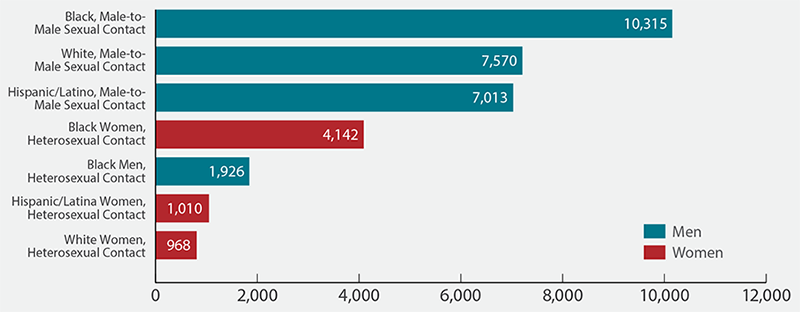
      • 67% were gay & bisexual men
        • 82% of all male diagnoses
      • 24% attributed to heterosexual contact
      • 6% attributed to injection drug use
    • African-Americans are 13% of the population, but represented ~ 45% of new diagnoses
New HIV Diagnoses in the United States for the Most-Affected Subpopulations, 2015
    • ~ 13 000 passed away from AIDS-related complications
    • Approximately 37% are on ARTs
  • In Sub-Saharan Africa
    • Approximately 24.7 million people are living with HIV
    • In 2014, there were 1.5 million new infections
    • Roughly 1.1 million individuals died from HIV/AIDS complications in 2014
    • Only 39% of individuals are on ARTs
    • South Africa, where I grew up, has a 19.2% prevalence of HIV in the adult population
      • Only 48% of those are currently receiving ARTs
      • South Africa has the biggest HIV epidemic of any country in the world
  • In Asia and the Pacific
    • Roughly 5.1 million are living with HIV
    • 300 000 were newly diagnosed in 2014
    • 180 000 passed away in 2014
    • 41% are on ARTs
  • In the Middle East and North Africa
    • 230 000 people are living with HIV
    • There were 21 000 new infections in 2014
    • There were 12 000 new deaths in 2014
    • Only 17% are on ARTs

  • In Latin America
    • 1.6 million are living with HIV
    • 94 000 are newly-infected as of 2014
    • 47 000 have passed away in 2014
    • 44% are on ARTs
  • In the Caribbean
    • 250 000 are living with HIV
    • 12 000 were newly-infected as of 2014
    • 11 000 had passed away
    • 42% are on ARTs
  • In Eastern Europe and Central Asia
    • 1.5 million were living with HIV in 2014
    • There were 190 000 new infections
    • 47 000 passed away from HIV/AIDS complications
    • 21% were on ARTs
  • In Western and Central Europe
    • Approximately 1.2 million are living with HIV
    • Approximately 50 000 were new infections
    • Approximately 9000 passed away
    • 59% are on ARTs

So, now that you're just a slight bit more aware of the global AIDS crisis, please, get involved. There are a myriad of organisations committed to HIV/AIDS research and awareness, including the NIH, amfAR, UNAIDS, (Red) campaign, One, and more.

Maybe supporting an AIDS orphanage is more up your alley. If so, Beautiful Gate is one I know of personally, but there are many similar organisations around the world.

The point is, please, speak up, get tested, fight the stigma, and, most importantly, campaign for a cure.

Sources
  • https://www.aids.gov/hiv-aids-basics/hiv-aids-101/statistics/
  • http://www.avert.org/global-hiv-and-aids-statistics

Friday, November 11, 2016

11/11

Today is of twofold value to me. In the US, it's Veterans' Day. Overseas, it's Remembrance Day or Armistice Day.

(Memorial Day, in the US, is on the anniversary of the end of the Civil War and has been a holiday here, obviously, longer than Remembrance/Armistice Day has been in the rest of the world)

To my friends, family, and colleagues in the US:

For those of you who have served, thank you. Whether in the Army, Navy, Air Force, Marines, or Coast Guard, whether based abroad or at home, whether in combat or out of combat, you have risked and given much in the defense of this country and the ideals it holds dear.

For that, you will always have my thanks and appreciation.

To my friends and former colleagues overseas:

Today, we remember those who paid the ultimate price. WWI and WWII exacted an extreme toll on many countries and many communities around the world. Of course, these are not the only wars waged on a global scale. Immediately coming to mind are the Vietnam war and Korean conflict. These men and women gave their lives to pursue and protect the ideals we hold dear in our modern, Western age.

From the rising of the sun to the setting of the same, we will remember.

Sunday, September 11, 2016

Chicken and Egg

So, my wife and I were getting food and, while we were eating/heading home, I had a revelatory moment. It hit me that many of us have the perception of the relationship between Diet and Exercise backwards.

Instead of dieting comparative to our daily level of exercise, we often seek to exercise comparative to our dietary intake.

The more I think about it, the more backwards it sounds. That's like saying "I put two extra gallons of gas in the car this week, so I need to drive it more."

As long as we use exercise as a means to try and undo our bad dietary habits, we're never going to make any serious effect on our health. As long as we keep the attitude of "I'll just do an extra couple of laps to make up for [those] doughnut[s]," we will always be stuck in a losing battle. As a society, we are far too sedentary to eat the way we do.

____________________________________Side Note_____________________________________
Now, I need to pause here. I must admit that I am exhibiting a clear example of "Do what I say; not what I do," because, remember the food I was eating in the car - it was Taco Bell (not to mention the regrettable number of doughnuts eaten at a conference this morning). So, keep in mind that I need to work on this myself.
_________________________________________________________________________________

So, instead of viewing exercise as a tool to undo bad eating habits, how should we be eating?

Well, we should be eating like professional athletes

That may sound odd, especially for those like myself who are mostly too busy to fit a regular workout in, but it's true. When we think about how athletes eat, it becomes very clear that athletes eat to fuel their bodies. They make sure to eat enough proteins, carbs, and fats to meet the demands of their sport. After all, they are using up a lot of energy that has to come from somewhere. Similarly, for those who rarely see the inside of a gym or who don't set apart time for physical activity, we need to eat enough proteins, carbs, and fats to meet our metabolic demands. The difference is, our demands are far less.

And, let's face it: eating less is far easier than exercising more.

So, let me ask the burning questions:

  • Do I really need that 12oz ribeye or would a 6oz cut be better?
  • Do I really need that one/two/four (cough cough guilty cough) doughnuts?
  • Do I really need to pack my plate that full this Thanksgiving?
  • Do I really need that mid-afternoon snack?
If you're anything like me (rugby 2-4 hrs/week; gym 0-4 hrs/week), the answer might just be, "No," and, you know what, it's okay.

So, come join me as I re-evaluate my own dietary intake and tune it to match my output

Tuesday, August 2, 2016

Aotearoa, A Cultural Heritage

One of the amazing things I am grateful for from my time in South Africa is the exposure to other cultures and ideas, different ways of celebrating facets of life. One amazing way I was able to see this was through the international rugby scene.

You see, the first time you watch rugby, it can be a little confusing, seeing all the scrums and lineouts that are called seemingly at random until some of the rules are learnt, but something that stands out for anyone, whether a tenderfoot or a veteran, is the All Blacks.


You see, New Zealand has this amazing national policy celebrating their Maori heritage, after all, they were there on Aotearoa before the very first Englishmen ever called it "New Zealand". The policy was made as part of an effort to help retain the Maori culture by making it a part of the national image.

Now, most people may look at the Haka as a war dance, or something done before sports games to intimidate opponents, but it has a far richer meaning that, as a foreigner, I do not even begin to have the right to express.

I remember a couple years ago, when the NZ national basketball team was playing in the US in the Spain Basketball World Cup, the majority of the US was dumbfounded, watching the New Zealanders shouting, stomping their feet, slapping their bodies, and making ferocious grimaces. I remember watching the replay, listening to the ESPN commentators, watching the confusion on the US teams' faces. To me, it was priceless.


Now, New Zealand's not the only nation to do some kind of war dance before sporting engagements. Samoa has the Siva Tau, Tonga has the Sipi Tau, and many other polynesian nations have a similar performance. Even the University of Hawai'i football team performs a haka before games, though the NCAA does not allow them to do it with the other team on the field as they are not allowed to "intimidate" the opponents.


But the Haka goes deeper. Like I said before, it's a celebration of a deeper heritage. Take, for example, Jonah Lomu's funeral. Arguably the greatest rugby player, he was a national icon for New Zealand.


Or take this haka performed by the family of the bride at her wedding.


What I enjoy seeing, though, is my American friends' interest and celebration of the Haka. That awareness of celebration of cultural diversity is an amazing catalyst to begin discussing the problems within our own country. America is supposedly the melting pot, but as I wrote a long time ago (albeit far more naively), we seem to be more like a really chunky stew, or, better yet, a potjie. We have a diversity of cultures here. we are not a homogeneity of whiteness. There is African-American culture, various Hispanic cultures, Asian cultures, African cultures, Native American cultures (unfortunately, many are mere remnants), even varying European cultures, and yet, the only ones we routinely celebrate and accept are the last.

Now, I'm not talking about heritage months, but I am talking about what heritage months are symptoms of. I'm sorry, but if we have to put in place heritage months for cultures to be celebrated and recognised, then we don't really celebrate and recognise them, do we?

So, to Aotearoa, New Zealand, I applaud you for recognising and seeking to celebrate your cultural heritage.

America, what would you look like were you to truly accept and celebrate the diverse members within yourself?

Monday, April 4, 2016

Child Abuse Prevention Month

April is National Child Abuse Prevention Month

This month, the talk gets real. People don't like to talk about it, exposing some of the deeper, hidden shames in our society, but let me be clear:

Child Abuse exists and it is far more prevalent than you may think.

In the 2014-2015 year, in the state of Virginia alone, almost 50 000 children were reported as possible cases of abuse or neglect, 6 500 of them having enough evidence to be considered a founded report. (CASA of Central VA Fact Sheet)

In one year, in a state of 8.5 million people, 6 500 children were reported, with enough evidence, of being abused.

Sure, that's less than 0.1% of the state population, but that's 6 500 children who will become adults. That's 6 500 children who were fortunate enough that someone realised that abuse was happening and was able to gather evidence thereof. For each one of those children there are unknown others who are being abused or neglected, many, majority, of them by family members.

In my small city of Lynchburg, and its surrounding area, there are currently over 500 children reported as being abused.

Child abuse has lasting ramifications - and I don't just mean on mental health (See a couple immediate examples) and the perpetuation of abuse to future generations. The CDC is currently conducting an ongoing study on Adverse Childhood Experiences (ACEs), an inventory of 10 indicators of childhood trauma, and their prevalence (~ 65% of the US population has a score of > 1) and health implications, showing a remarkable correlation between chronic diseases and an ACE score as low as 1 (ACEsTooHigh).

For those of you curious enough, ACEs comprise:

  • Abuse
    • Physical
    • Emotional
    • Sexual
  • Neglect
    • Physical
    • Emotional
  • Traumatic Household Experiences
    • Separated/Divorced parents
    • Witnessing violence against mother
    • Family member was a alcoholic/drug addict
    • Family member was a mental health patient
    • Family member was in jail/prison

Oddly enough, ACEs were discovered during an obesity study in which a patient who had been losing weight significantly suddenly regained all her lost weight. When the researchers investigated this, they found that the patient in question had been sexually abused as a child and turned to obesity as a protective mechanism. In the process of losing weight, she was catcalled, which triggered memories of her abuse and she put the weight back on as protection (ACEsTooHigh).

Our children, the generations of tomorrow deserve a life free of the effects of abuse and neglect. Those who are trapped deserve a way out and understanding arms to lean on.

Begin the discussion today and let's all take a stand against Child Abuse in Virginia, in the US, around the world.

Virginia Child Abuse and Neglect Hotline: 1-800-552-7096
National Child Abuse Hotline: 1-800-4-A-Child (422-4453)

Resources
Court Appointed Special Advocates (Of Central VA)
Prevent Child Abuse (VA)
 - Fact Sheet
US Dept of Health and Human Services
ACEstudy.org
 - ACE Questionnaire
ChildTrends ACE Factsheet

Sunday, November 8, 2015

We Remember

A red sun sets upon the hill
The blood spilled on the ground
As hands which once held stones before
Stood angrily around

We remember you who go before
We remember you who've left
The name of God upon your lips
As mothers torn, bereft

A song sung from a hundred lips
Echoes across the plain
As men and women raised on high
Sing praises through the pain

We remember you who go before
We remember you who've left
The name of God upon your lips
As fathers torn, bereft

A silence filled the crowded square
Condemned upon the dais
A chop and thud cuts off the sound
Of the prisoner's last prayer

We remember you who go before
We remember you who've left
The name of God upon your lips
As sisters torn, bereft

The women scream, the comfort breaks
Unsettled houses turn
Unwelcome violence cannot still
The praises from their lips

We remember you who go before
We remember you who've left
The name of God upon your lips
As brothers torn, bereft

At last the final trumpet sounds
The grave gives up its dead
Tears will no more stain our eyes
In joy we'll live instead

We remember you who go before
We remember you who've left
The name of God upon your lips
A family born through death

Tuesday, September 8, 2015

Tomorrowland, Society, and Christians

This past weekend, my wife and I had the opportunity to go on a date to a movie theatre that was closing (it was where we had our first date, so we absolutely had to have one more before it closed. We chose to watch Tomorrowland, which is an excellent film, though a little intense for younger viewers, but I digress.

The main theme of the movie was that it was discovered, in the 40s, when the earth was going to die, well, the probability was discovered. When Earth was warned, the probability began to escalate as society latched onto this idea. (Disney did their history - this correlates with dystopianism and a rise in a fear of science and its capabilities, and general Malthusianism). Spoiler alert, highlight to read: The plot twist and solution to the issue was optimism, refusal to accept the end, and a willingness to act and change it.

My wife and I sat and chatted over this for a while afterwards, talking about the general distrust of science and progressing towards the prevailing "Doom & Gloom" mentality that society has about the future, how the wealthy, with their ability to choose, limit the poor (see the GMO debate), and how there's plenty present today that would help contribute to a more optimistic outlook, from science, to sociology, to religion, should society actually take the time to educate itself.

You see, as far as the dystopian future goes, advances in agriculture and a realistic concept of the amount of space present on the earth actually detract from malthusian arguments. Of course, this means stepping outside of our immediate bubbles and allowing GMOs to continue. Added to that, we have the whole fear of science, which often isn't really a fear of science, but of what science could do in the hands of someone else, but the answer to both is a better persective of the various redundant safety checks and conventions present in may ground-breaking science technologies, think, for exmple, nuclear power - it's safer than ever before, yet we still only ever think of Chernobyl.

The answer for society, though, comes from deeper issues. You see, as I've said before, Western society is becoming increasingly more insular, with the very divisive belief prevailing that

  1. Only you, as the individual, can determine what is right for you
  2. You cannot know what others have determined in themselves to be right
These posits are detrimental to society, breeding fear and retaliation based upon fear into every aspect of  modern society.

So, we see all these ills in society, which feed into the continual dystopic outlook, but where does the church fit in?

The church fits in, truly, in three key areas:
  1. Faith
  2. Hope
  3. Love
Faith:
We have the belief that truth is universal. We hold to the idea (in theory) of corporate worship, where the body of believers comes together in community, as one, in support of one another. The church is a powerful vector for a revolutionary social philosophy that works for the building of community - one body of believers, united under the headship of Christ.

Hope:
The church has long held to a twofold hope. The first aspect is that, despite what wrongs may assail us, that God will work all things ultimately for our betterment as a whole. That doesn't mean we will all be rich and well-fed eventually, but that we will have what we need and will be stronger in our faith compared to where we began. The second is the hope of the resurrection, that Christ himself overcame death when he took our punishment and was raised from death three days later. From Christ, we have the hope, based upon faith, that we, too, will take part in the resurrection, being united in fellowship with Christ in heaven.

So far, Faith and Hope have been largely individualised, which is great, for the individual believer, but that doesn't impact society. From just these two alone, we see no effect on the greater perspective of dystopia and ruin that is so prevalent in society today. Ironically, this is where many Christians stop, possibly because it's comfortable, it's easy. Faith and Hope by themselves demand very little of us to step outside of ourselves. Thankfully, we're not quite finished.

Love:
Love is difficult. Love is radical. To truly love another is uncomfortable, irrational, and unwise, but that is exactly what society needs. You see, to love the Lord with all of one's heart, soul, mind, and strength is already uncomfortable - it demands superseding God above oneself. It necessitates the surrender of one's life is every aspect - physically, mentally, spiritually, and emotionally. The second half of Christ's summary of the law, though, is what has the capacity to drastically change the way society lives. 

To love one's neighbour as oneself sounds all nice and catchphrase-y, but, truly, it asks more of us than we imagine. How do we love ourselves? We make sure we have not just enough food to nourish us, but enough to satisfy and fortify us. We make sure we have enough not just for our needs, but our wants. We make sure we have shelter, and luxury shelter at that. We have excellent healthcare, well-paying jobs, top-quality education, and the list goes on. These are things we want for ourselves, things we give ourselves, because, frankly, we want them and we love ourselves in these manners. 

Would we want to live in a dirt-floored, scrap-walled shack, with unseasoned rice and beans whenever what little money we get comes in, no healthcare, no profitable job, and little, if any education? 

Of course not, but that is exactly how the majority of this world's population lives. If we are to love our neighbour as ourselves, then shouldn't we do something about this? A man even asked Jesus what he meant by our neighbours, because, you know, we tend to choose pretty well-off individuals to live near, if we can help it. Christ answered the man with the parable of the good samaritan. Our neighbour is our fellow man. What are we doing, then, sitting in our luxury, not looking after those in need? We should be, as verse 37 implies, doing likewise and helping those in need. Even earlier in Luke, in chapter 6, verses 20-38, we see Christ laying down even further how a Christian should be living. Do you see a common thread? Love is selfless. I was reading this passage this morning and verse 30 stood out to me:
"Give to everyone who begs from you, and from one who takes away your goods do not demand them back."
I remember seeing beggars outside every shopping center and on almost every street corner. I nearly cried as I read that, recalling how many times I, with money in my pocket, lied and said I had nothing.

True Love is radical. It is self-sacrificial. We see in some of Christ's last words to his disciples what Love truly entails:

"This is my commandment, that you love one another as I have loved you. Greater love has no one than this, that someone lay down his life for his friends." - John 15:12-13
Christ considered as friends all who followed him, but the emphasis here is not on friends, but on the laying down of one's life. We see in Romans how Paul  talks about Christ having laid down his life for not just his friends, but his enemies, those who did not believe in him. If Christ loved us enough to lay down his life for us, friend or enemy, we, who are commanded to love as he did, should be doing the same, should we not?

Love is the answer to our issue today. Church, while we have Faith and Hope, if we do not have Love, how could we ever communicate the difference that Christ makes in us? How else could we even begin to combat the dystopianism and fear so prevalent in society today? We have the answer, but why do we not broadcast that? What do we try and assimilate ourselves into the very same culture from which we should stand apart? Has anyone ever changed the path of a river by flowing along with the current? No, we must stand up and live out what Christ commanded. We must come together and Love those around us - the early church had the right idea, pooling their resources and giving to those who were in need. If we want to make a change in the world today, we need to begin to love radically and lavishly. 

Who cares if the world mocks and derides us? We were already told that would be the case from the beginning. We have an opportunity to speak hope into this society, to avert the cycles of fear and fearmongering in society today, we just need to act now, to lean on God, and to Love.
Tuesday, September 24, 2013

Under Fire

It might come as no surprise to you that there exist countries in which the Gospel is banned. In some of these, an exposed missionary might get off with as little as deportation. In others, jail, torture, or death. Yet despite the opposition, Christian men and women answer God's call to put their lives on the line so that others might hear of the salvation of God.

To most of the world, this would seem mad and, to a degree, they'd be right. What people don't seem to understand is two things:

  1. The Great Commission. The directive to go and make disciples worldwide (whether at home or away) was never a suggestion. It was never an option. It was and is a command and if one is living under and following after Christ, this is a non-negotiable, not from a legalistic standpoint, but from the desire to honor God.
  2. Death is not the end. As Paul put it, "to live is Christ and to die is gain." If we live, we continue to serve Christ and to bring Him glory. If we die, we are present with Him in glory - something far better than this world can ever give.
We are called to stand up in the face of opposition and make disciples. We are told to grow in our faith and relationship with Christ so that, when asked, we may give a reasoned defense. We are told to seek God and His glory above all else and God will give us the strength to accomplish the tasks set before us.

We will face trials. We will face persecution. We were never promised the "Christian Dream" of a good job, beautiful wife, lovely family, no troubles, etc. Christ flat out tells his followers in the begging that we're going to have crap thrown our way because we follow Him.

“If the world hates you, understand that it hated Me before it hated you. If you were of the world, the world would love you as its own. However, because you are not of the world, but I have chosen you out of it, the world hates you. Remember the word I spoke to you: ‘A slave is not greater than his master.’ If they persecuted Me, they will also persecute you. If they kept My word,they will also keep yours. But they will do all these things to you on account of My name, because they don’t know the One who sent Me. If I had not come and spoken to them, they would not have sin. Now they have no excuse for their sin. The one who hates Me also hates My Father. If I had not done the works among them that no one else has done, they would not have sin. Now they have seen and hated both Me and My Father. But this happened so that the statement written in their scripture might be fulfilled: They hated Me for no reason." - John 15:18-25
So, stand up. Pray for and support those on the front lines, whether they be in Syria, China, Indonesia, or Alabama. Step up to the plate and further the Gospel in your city.

Sometimes we have this perspective of missionaries as honourable radicals and the rest of us as wise men, assimilating into society, staying below the radar so we aren't persecuted, Kind of like these guys:


So, yes, you can run, hide, and you might live. You can step out into the fight and stand bold for Christ and you may die, but at the end of the day, at the final judgment, will you be separated into the sheep or the goats?

Sunday, February 26, 2012

GO! (or, let me ask you a question)

I was talking with a friend earlier tonight about the church. We talked about many things ranging from complacency to 1st world/3rd world differences to "Country Club" church culture in the Western world. One big sticking point to which we kept returning was the idea of complacency and what we should be doing.

Regarding complacency, we talked, talked, and talked some more and we came to the point of realizing that we couldn't peg down what was the key cause of complacency. We tossed up Western culture, status as a Christian nation, wealth, comfort, and a multitude of other options. We also couldn't figure out why some individuals dedicate so much time to the church, learning, growing, and serving, yet they rarely talk of Christ or Christianity outside of church and then usually only in the context of their church.

Let me ask you a question. In a legal setting, if someone knows critical information about a case under investigation/trial, but refuses to divulge this, what happens to the person?

Now, let me ask you another question. If you knew a specific person was going to die today, would you tell them and try to avert their death? On whose head would the blame lie if you don't tell and the individual dies?

Let me bring to your attention the words of God:
"As for you, son of man, I have made you a watchman for the house of Israel. When you hear a word from My mouth, give them a warning from Me. If I say to the wicked, 'Wicked one, you will surely die,' but you do not speak out to warn him of his way, that person will die for his iniquity, yet I will hold you responsible for his blood." - Ezekiel 33:7-8
Now, let me ask you a third question. Readers who associate with the Christian faith (i.e. you who call yourselves Christians), when last did you convey God's warning to the people around you?

"What warning?"
Why, the warning that every man is born sinful and destined for eternal death and hell.  Yes. I just said hell. It's a real place and it's where anyone who hasn't accepted Christ as their lord and their saviour is destined to go.

Let me ask you yet another question, or rather, let me allow Penn Jillette, who, at the time of this clip, was not a Christian (I don't know if he currently is one) to ask the question.

"How much do you have to hate someone to not tell them about Jesus?"
"Okay, fine, but please tell me this, why should I go and tell some complete stranger?"
It's a direct command from Christ.

  • Matthew 28:18-20
  • Mark 16:15
  • Luke 24:46-47
  • John 21:20
  • Acts 1:8
These are 5 different accounts of Christ's last words before His ascension. Nowhere in them is there the idea that this is an option. It is a direct command to preach the Gospel to the world. You don't have to go to some foreign country either. You can start right now at the 7-Eleven down the road.

"But evangelism isn't one of my spiritual gifts!"
Well, fortunately for you, evangelism isn't a spiritual gift. Romans 12 nor 1 Corinthians 12 speak of evangelism as a gift. It is an imperative action. It is something we must do.

"But I'm saved by grace, not by works."
Correct you are, but let's check out James 2:14-26. (verse 26 below)
". . . 26 For just as the body without the spirit is dead, so faith without works is dead"
Evangelism, being a work stemming from one's faith, is an integral part to Christianity. Evangelism is the vehicle by which word of God is spread. Were it not for evangelism, Christianity would not have spread all throughout the Roman Empire in a few hundred years.

Penny for your thoughts?

For more information about missions, evangelism, and unreached people groups worldwide, check out these sites: